
 By
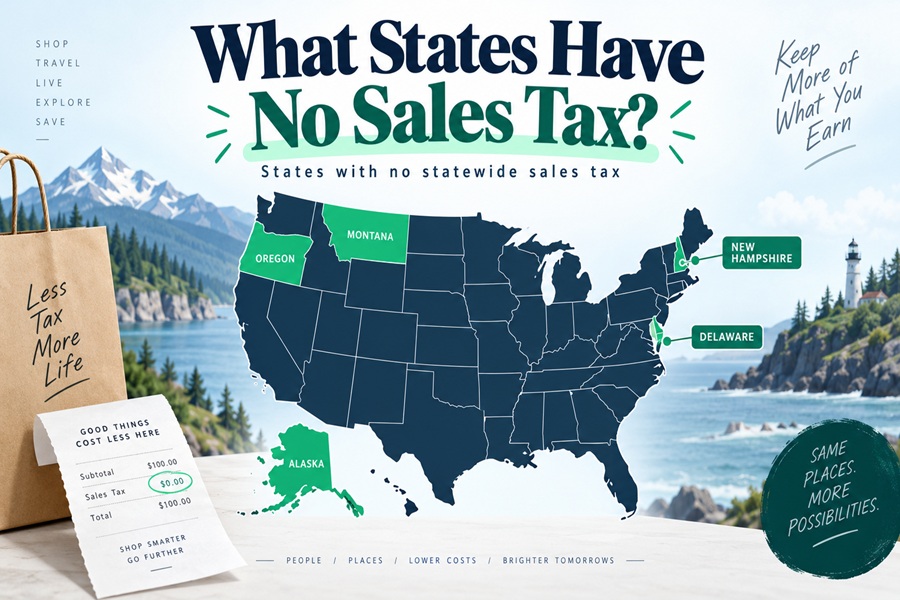
Five US states have no statewide sales tax: Alaska, Delaware, Montana, New Hampshire and Oregon. Tax professionals call them the NOMAD states, a handy acronym built from their initials. Four of them also have no local sales tax in general, which means most purchases there cost exactly the sticker price. Alaska is the exception, because its cities and boroughs are allowed to charge their own.
That is the quick answer. The more useful answer is what these states do instead, because no state runs on zero revenue, and the “catch” changes from one state to the next.
The five states at a glance
| State | State sales tax | Local sales tax | Where the money comes from instead |
|---|---|---|---|
| Alaska | None | Yes, in over 100 communities, roughly 1% to 7.5% | Oil revenue, local sales and property taxes, no personal income tax |
| Delaware | None | None | Gross receipts tax on businesses, personal income tax |
| Montana | None | Resort area taxes in certain towns | Personal income tax, property tax, lodging and rental car taxes |
| New Hampshire | None | None | Meals and rooms tax on restaurant meals, hotels and car rentals, property tax |
| Oregon | None | None, with rare local exceptions | One of the higher personal income taxes, corporate activity tax |
According to the Tax Foundation’s midyear figures, the population weighted national average combined sales tax rate is about 7.53 percent. Skipping that on a large purchase is real money, which is why these five states draw cross border shoppers.
Alaska: no state tax, plenty of local ones
Alaska is the only NOMAD state where you can still pay sales tax at the register. More than 100 municipalities levy their own, and the Tax Foundation puts the average local rate at about 1.82 percent. Rates vary a lot by town. Anchorage and Fairbanks charge no local sales tax, while places like Juneau and Kodiak do. Some tourist towns even raise their rates in the summer season.
Because there is no state agency running the system, local governments created the Alaska Remote Seller Sales Tax Commission. Online sellers with more than $100,000 in annual Alaska sales register with that commission and collect tax for participating communities. The old transaction count test has been dropped, so revenue alone now decides whether a remote seller must register.
Delaware: tax free shopping with a business tax behind it
Delaware has no state or local sales tax, which is why outlet malls near the state line stay busy with shoppers from Pennsylvania, New Jersey and Maryland. Instead, Delaware charges businesses a gross receipts tax on their total sales. Shoppers do not see it on the receipt, but it is built into how businesses operate there.
Montana: mostly tax free, except in resort towns
Montana has no general sales tax, but it does allow certain resort communities and areas to charge a local resort tax on items like lodging, restaurant meals and luxury goods. Towns near ski areas and national park gateways are the usual examples. The state also taxes lodging and rental cars, so visitors pay more than residents shopping for everyday goods.
New Hampshire: the meals and rooms exception
New Hampshire has no general sales tax, yet anyone who eats out or books a hotel will notice a tax on the bill. The state’s meals and rooms tax covers restaurant meals, hotel stays and car rentals. New Hampshire also leans heavily on property taxes, which are among the higher ones in the country. It has no tax on wages, and its old tax on interest and dividends has been phased out.
Oregon: income tax does the heavy lifting
Oregon has no sales tax and voters have rejected one many times. The state relies instead on a personal income tax with some of the higher top rates in the US, plus a corporate activity tax on larger businesses. Shoppers from Washington, which has no income tax but a high sales tax, often cross into Portland area stores for big purchases.
Does buying in a NOMAD state mean you pay no tax at all?
Not always. This is the part many shoppers miss.
- Use tax. Most states with a sales tax expect residents to pay use tax on items bought tax free elsewhere and brought home. Enforcement on small purchases is light, but the obligation exists.
- Vehicles. Cars, trucks, boats and RVs are usually taxed where they are registered, not where they are bought. Buying a car in Oregon does not avoid your home state’s tax if you register it at home.
- Online orders. Since the Supreme Court’s Wayfair decision, online sellers collect tax based on where the item is shipped. Ordering from a Delaware company while living in Ohio still means Ohio tax.
Moving to a NOMAD state for tax reasons
Sales tax is only one piece of the household tax bill. A family in Oregon saves on purchases but pays a meaningful income tax. A New Hampshire homeowner avoids sales and wage taxes but may face a large property tax bill. Alaska residents may pay local sales tax and property tax yet receive the annual Permanent Fund Dividend.
The smarter comparison is total tax burden, which combines income, property, sales and excise taxes against your own income, spending and home value. Someone who spends heavily but earns modestly benefits most from a no sales tax state. A high earner may come out ahead in a state with no income tax, such as Texas, Florida or Washington, even with a higher sales tax.
States with low sales tax as an alternative
If a NOMAD state is not realistic, a few states keep the statewide rate low. Colorado’s state rate is under 3 percent, though local rates add a lot on top. Several states also exempt groceries, which cuts the effective rate for everyday spending. At the other end, Louisiana and Tennessee carry some of the highest combined averages, close to 10 percent once local rates are included.
A note for small business sellers
Selling from a NOMAD state does not free a business from sales tax everywhere. Every state that has a sales tax now enforces economic nexus rules, usually triggered by a set level of sales into that state. A Montana based online shop that ships heavily to California or Texas must register and collect there once it passes those thresholds. Several states have also dropped transaction count tests and now look at dollar sales only, so checking current thresholds once a year is a smart habit.
Tax rules change, especially at the local level, so check the state revenue department or a licensed tax professional before any large purchase or move made for tax reasons.






Comments