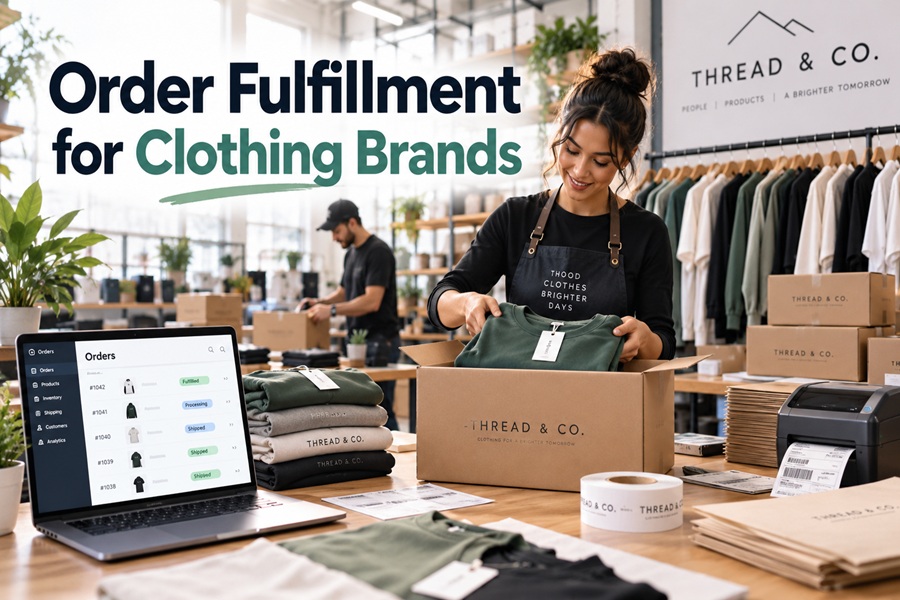
Follow one cotton sweater from the moment it arrives at a warehouse and you will understand why clothing is one of the trickiest categories to fulfill. That single design might come in five sizes and four colors, which makes twenty separate products to track. It needs to arrive folded neatly, free of lint and wrinkles. And there is a real chance it will come back.
Apparel fulfillment is less about moving heavy boxes and more about precision, presentation and handling returns without losing your margin. Brands that master those three things usually outgrow competitors who treat clothes like any other parcel.
Arrival: Every Variant Is Its Own Product
When a shipment of sweaters reaches the warehouse, staff count every size and color, check for defects and assign each variant a unique SKU and barcode. A single style with five sizes in four colors becomes twenty SKUs. Multiply that across a seasonal collection, and a small brand can easily manage hundreds or thousands of variants.
This is where errors begin if the process is sloppy. A medium labeled as a large on day one creates an angry customer weeks later. Good receiving teams scan every unit, spot check measurements against the spec sheet and flag factory mistakes before the items reach a shelf.
Quality checks at this stage pay off. Loose threads, misprinted labels and small stains are cheaper to catch now than to process as returns.
Storage: Folded, Hung or Binned
Clothing gets stored in a few ways, and each affects cost.
Folded in bins or on shelves. This is the most common and space efficient method for t shirts, knits, denim and activewear. Each SKU gets its own labeled bin.
Hanging on rails. Structured garments such as blazers, dresses and formal shirts often stay on hangers to avoid creases. Hanging storage takes more space and usually costs more.
Bagged individually. Many brands ship garments from the factory in clear poly bags with a barcode sticker on the outside. This protects against dust and makes scanning easier.
Smart layouts place bestselling sizes, often medium and large, in the most accessible bins. Slower sizes such as extra small or extra extra large can live a little further away.
Picking: Where Similar Items Cause Trouble
Picking mistakes in apparel usually come from items that look nearly identical. Black and charcoal. Size 8 and size 10. A slim fit and a regular fit with the same color.
Barcode scanning at the pick stage is the single biggest safeguard. Each item is scanned and matched to the order before it moves on. Many warehouses also use batch picking, where one picker collects items for multiple orders in a single trip, then sorts them at a packing station.
Packing: The Unboxing Is Part of the Product
Clothes are light and soft, so they usually ship in poly mailers rather than boxes. This keeps shipping weight and dimensional charges low. Premium brands may use branded boxes, tissue paper and stickers, which raise cost but strengthen the customer experience.
Practical packing details make a difference:
- Fold consistently so garments arrive looking like they did on the website.
- Use tissue or a sleeve for delicate fabrics to prevent snags.
- Add a packing slip with return instructions so customers do not have to search for them.
- Include care cards for items like wool, silk or denim that need special washing.
- Right size the mailer so the garment does not slide around or crush.
Some brands also include a size guide card, a small investment that can prevent the next order from becoming a return.
Returns: The Part of the Business Nobody Brags About
Apparel has the highest return rates in ecommerce. The National Retail Federation and Happy Returns put the overall online return rate at 19.3% for 2025. Clothing runs well above that. Coresight Research estimated the U.S. online apparel return rate at 24.4%, adding up to roughly $38 billion of clothing sent back in a single year.
The leading cause is fit. In that same research, more than half of apparel sellers named size and fit as the top reason for returns. Another growing driver is bracketing, where shoppers order the same item in two or three sizes, keep one and send the rest back.
Every return costs money. There is the return label, the labor to inspect and refold the item and sometimes a markdown if the garment cannot be sold at full price. Some industry estimates put the fully loaded cost of an apparel return at around $30 per item.
Turning Returns Into a Process
Brands that handle returns well usually follow a clear system.
- Inspect each item quickly for tags, stains, odors and damage.
- Grade it. Items in perfect condition go straight back to stock. Lightly worn or flawed items go to an outlet, resale or donation channel.
- Refold and rebag sellable items to match new stock.
- Update inventory the same day so the size shows as available online.
- Record the reason for every return by SKU.
That last step is where the real savings hide. If one style keeps coming back as “too small,” the fix is not in the warehouse. It is a sizing chart update, a product description note like “runs small, consider sizing up” or a conversation with the factory.
Reducing Returns Before They Happen
Fulfillment teams and marketing teams often work separately, but returns connect them. Some of the most effective tactics include:
- Detailed size charts with garment measurements, not just body measurements.
- Fit notes from real customers, such as “true to size” or “relaxed through the shoulders.”
- Model information, including height and the size worn.
- Encouraging exchanges over refunds, which keeps revenue in the business.
- Clear return windows and conditions that are fair but discourage abuse.
Many apparel brands now offer free exchanges while charging a small fee for refunds. The goal is not to punish customers, but to steer them toward the outcome that works for both sides.
In House or a Specialized 3PL
Small clothing brands often fulfill orders themselves at first, folding and packing in a studio. As volume grows, many move to a third party logistics provider. For apparel, the best partners are ones that already handle fashion accounts.
Questions worth asking:
- Do you offer both folded and hanging storage?
- How do you handle returns, and what does each return cost?
- Can you include custom inserts and branded packaging?
- What is your pick accuracy rate?
- Do you integrate with Shopify, marketplaces and wholesale channels?
Wholesale matters too. A brand that sells to boutiques or department stores will need a partner who can handle bulk orders with retailer specific labeling and packing rules, which are very different from single orders to consumers.
Back to That Sweater
When everything works, the sweater is scanned at arrival, stored in the right bin, picked without confusion, folded neatly into a branded mailer and delivered in two or three days. If it does not fit, it comes back, gets inspected, is restocked within a day and the reason is logged so the next customer picks the right size.
None of that is glamorous. But in clothing, the warehouse floor is where loyalty is won or lost.
Leave a Reply